






By Hope Vang
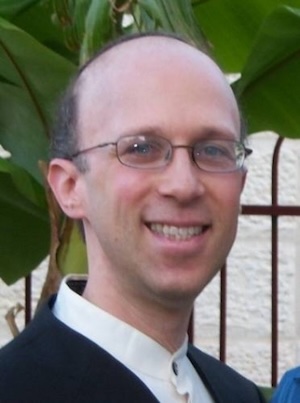
Joseph Kowalsky (ΦBK, Wayne State University) sees the future as limitless. From owning a long-distance telephone company, a stint on Capitol Hill, founding and running, for nearly a decade, a non-profit sliding-scale-fee legal clinic, and doing volunteer work as far away as Whanganui National Park in New Zealand and a farm in Australia, to his “day job” as a financial planner who manages about $40 million in client assets, he has done it all. Kowalsky is the founder and (volunteer) president of Organs for Life, a non-profit organization whose mission is to “make organ transplants safer, less costly, and more available.” His journey toward bettering the world has shown that lifelong dedication and perseverance make all the difference.
Kowalsky had broad interests, including a tremendous curiosity for science, from a very young age. He remembers watching the original Star Trek series with his mom during his early childhood and believes that this, along with things shared by his father (who was a science teacher), encouraged this interest. He fondly remembers starting a science club when he was in elementary school. He recalls one particular science experiment that involved using touch-tone phones and a connected computer to try to build a robot. “It didn’t work,” he said. “But when you’re young, you think that if you start working on something, it will just happen.” And while that particular experiment was a dud, it did not stop him. His perseverance and dedication to working toward success were born and would shape his life into one that helps other people.
The death of his maternal grandfather had a big impact on his perception of mortality. “The Bible said that people die at seventy, but my mother’s father died at 69,” Kowalsky recalled. His paternal grandfather, whom Kowalsky is named after, died even younger at 55, leaving another lasting impact on him as a child. “He needed one heart bypass, but they did not know how to do that at that time. If he had lived one more year, he might be alive today. It made me think about the technological aspects of medical science: how far we have come and how far we have yet to go.”
Kowalsky graduated magna cum laude from Wayne State University with a B.A. in economics and was in the Visiting Student program at Columbia University before attending the University of Michigan for law school. In addition to his degrees in economics and law, as well as his interest in science, he also enjoyed writing during his youth. He penned a play performed by his middle school, won two golden keys in the Scholastic Writing contests in high school, wrote fiction during college and law school, and volunteered as a magazine editor for a non-profit organization.
His induction to ΦBK came with a great feeling of honor. “My mom was ΦBK, so I knew about it when I was little,” he said. “When I found out I was inducted, it was a big thing. I had a lot of respect for Mom’s achievement. My mom is so smart, and to think I could be in the same organization that she was in was a really significant thing to me.”
Kowalsky clerked at the Federal Trade Commission. Then, after completing his education, he worked for Senator Carl Levin, the Presidential Transition Team, and the campaigns of various members of Congress. He also volunteered with the Concord Coalition, a bipartisan group that lobbies for deficit reduction. His parents influenced his passion for helping people in all the ways he can, as Kowalsky explained:
“My parents were big volunteers in all sorts of areas. For example, they drove people places and visited the sick and elderly until they themselves were in their late 70s. They would talk about Phil Hart, who was called ‘The Conscience of the Senate,’ and the importance of what he did and his dedication to people. As time went by, I thought that working in government and politics was a way that I could leverage what I wanted to do and make a larger impact.”
Working with Democrats and Republicans, including Senators Carl Levin, Paul Tsongas, and Bob Dole, and Congressmen Bill Brodhead and Jack Kemp, Kowalsky always looked forward to working with honest and caring people who were making sincere efforts to make change for the greater good.
Despite his deviation from studying sciences in academic settings, Kowalsky still found ways to focus his interest in this field by being involved with medical technology. He jokes that his assistant describes him as “a friendly tornado” for his active interests in many things. Kowalsky talks of running Organs for Life during “his spare time, between 2 and 5 AM.” “Life is too short,” he said. “There are so many things to do in this world.”
Organs for Life is a unique non-profit organization because of how it promotes research for “safer, less costly, and more available” organ transplants, educates people about the realities of organ donation and transplants, and encourages people to demand more governmental support for research. Organs for Life also sponsors the Organ CryoPreservation Prize, which is also referred to as the CryoPrize. The CryoPrize’s goal is “to encourage and reward the critical research needed to eliminate the current obstacles to successful organ transplants.” Organs for Life offers a monetary prize for any person or group that is able to successfully store one of several listed mammalian organs at cryogenic temperatures and then transplant it and prove that the organ functions properly.
As of now, the CryoPrize requires that one of the following organs be used: the heart, lungs, liver, and/or pancreas. While there has not yet been a group that has won the CryoPrize, Kowalsky recounts that an organization has claimed to have revived a mammalian kidney to functionality, and another has claimed to have revived ovaries to functionality. “It was not part of the prize, but on the periphery,” he said. “There is a promising future if these claims can be verified. Even more encouraging, there are animals such as the wood frog that freeze solid over the winter, with no organ functionality, and then revive in the spring. We know that it works in nature, and it is only a matter of time and figuring out how to duplicate it, as we have copied birds to build airplanes.”
Kowalsky had the opportunity to have “drinks” (tea and hummus) with Leonard Nimoy, the original Mr. Spock from Star Trek, through an auction for one of his charitable causes, Symphony Space Theater. Although meeting his childhood celebrity was a surreal moment, Kowalsky recalls feeling grounded in their conversation. “When you’re talking with Leonard Nimoy, he would be looking at you so intensely. It would be like there’s nobody else,” he said. Still, the buzz of talking to a celebrity does not hinder Kowalsky from making a genuine connection with someone of Nimoy’s status. “I still get excited when I talk to people who are important in my life, but I do recognize that they are just people. The reality is that we’re all people. We’re all more alike than we are different, and we need to work together to try to make this world a better place.” Through this conversation, Nimoy became a public supporter of the CryoPrize, becoming the CryoPrize’s first celebrity endorser.
Kowalsky’s ΦBK membership is a testament to his lifelong commitment to many passions across the liberal arts and sciences. “I feel that the liberal arts are more of a field of general, broader studies than other areas that are more regimented. We need to broaden our understanding and our thinking; the world is—people are becoming too narrow and too focused. We need a broader sense of the world to understand the world,” said Kowalsky.
Reflecting fondly on the Star Trek episode “Mirror Mirror,” Kowalsky shares a bright word of advice that helped illuminate his desire to help the world and his belief that each of us can make a difference. He mentions it regularly when he speaks to groups: “Captain Kirk finds himself in a barbaric alternate universe. He tries to convince Mr. Spock of that universe that he should work to change it for the better. Mr. Spock notes that ‘one man cannot summon the future,’ to which Captain Kirk immediately replies, ‘But one man can change the present!’ And I say to you: Be that one person.”
Hope Vang graduated from the University of California, Irvine in June 2023 with a B.A. in English, a B.A. in comparative literature, and a minor in creative writing. She was inducted into Phi Beta Kappa by UCI’s Mu of California chapter during her senior year. This fall, she will be a second-year master’s student in English literature at Fresno State University.