






By Paula Zepeda
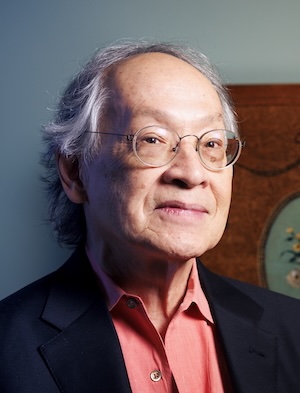
This fall, the Library of Congress appointed Arthur Sze (ΦBK, University of California, Berkeley) as the 25th Poet Laureate Consultant in Poetry of the United States, known to be one of the highest honors in poetry. Notably, Sze is also the first Asian American, and from Santa Fe, New Mexico, to hold this prestigious position.
Born in New York City in 1950 as a second-generation Chinese American, Sze’s heritage has played a key role in shaping his outlook on poetry. In an interview hosted by the Academy of American Poets, he said: “Just in terms of personal background, my parents were immigrants from China. I grew up in New York City and I spoke Mandarin Chinese. So I’ve always felt this kind of East and West, the pull of ancient Chinese culture, though I’m writing in English.”
While his cultural upbringing influenced his worldview, it was his educational journey that transformed those early influences into a clearer exploration of poetry. He attended Massachusetts Institute of Technology with an initial focus on science and math, but soon discovered a deeper calling in poetry upon taking a poetry workshop his sophomore year. He later transferred to University of California, Berkeley to pursue it. He graduated with his B.A. in a self-directed major in poetry, along with Phi Beta Kappa distinction.
Although the disciplines Sze pursued at college contained stark differences, they have both nonetheless reinforced his intellectual curiosity to expand beyond one a single focus: “The liberal arts and sciences both have at their foundation a sense of wonder. In my everyday life, which is a life of writing, I find that I am able to draw from many different disciplines—philosophy, astronomy, music, weaving, physics, ecology, mushroom hunting—that, interwoven, enrich my poetry.”
Sze’s fervent dedication to enhancing poetry has received national recognition over the years, before obtaining this laureateship, winning awards such as the 2025 Bollingen Prize for American Poetry for Lifetime Achievement for works including Into the Hush (2025), the National Book Award for Poetry for Sight Lines (2019), and the 2024 Rebekah Johnson Bobbitt National Prize for Poetry from the Library of Congress, to name a few. In addition, his work has been translated into 15 different languages, including Chinese, Spanish, Portuguese, German, and Korean.
His education not only redirected his academic focus, but it also shaped a distinctive poetic philosophy grounded in translation and cross-cultural understanding. Sze reflected on his path as a writer, saying, “Unlike many American poets, I did not go to graduate school and receive an MFA degree in Creative Writing.” He continued, “Instead, I turned to classical Chinese poetry and learned my craft through translation.” For Sze, this practice carries broader meaning, as he described translation as “a deeply humanizing and creative endeavor.” He explained that it “makes the ancient contemporary, the foreign accessible, and the emotional, imaginative and spiritual music of our interior lives universal,” ultimately affirming that “translation builds bridges and makes community.”
This poetic philosophy manifests in his central mission as the U.S. Poet Laureate. “Translation practice enables us to understand other cultures, other points of view, and it is a crucial vehicle that helps us expand the resources of our language and develop our own voices and visions.” Sze said. “I want to try to widen and deepen the appreciation of poetry (the goal of the U.S. Poet Laureate) through the lens of poetry-in-translation, and I believe this is a vital and necessary project.”
Sze’s commitment to cultural dialogue and intellectual curiosity closely aligns with the values upheld by Phi Beta Kappa. Reflecting on the meaning of ΦBK, Sze said, “I recognize ΦBK as an organization that advocates for excellence in the liberal arts and sciences.” He added that the organization “promotes freedom of inquiry and expression,” and emphasized its guiding principle, noting that its motto is “love of learning is the guide of life.”
These ideals, he explained, have profoundly shaped both his perspective and his creative work. As Sze observed, “These values have deeply informed my outlook and my creative path.” Reflecting on his career as a poet, he shared, “So far, I have published twelve books of poetry, and, with the publication of each book, I have had the wonderful opportunity to start anew, to be a beginner again.” He concluded by describing his ongoing process, saying that he continues “to question what I have done, and to write with imagination, emotion, precision, and with a stronger command of language.”
Paula Zepeda is a recent graduate of University of California, Los Angeles who majored in Political Science with a minor in Latin American Studies. She was inducted into Phi Beta Kappa in spring 2024. UCLA is home to the Eta of California chapter of Phi Beta Kappa.