






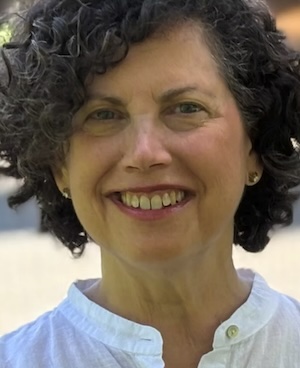
Sanctuary at Unity Farm draws readers into the rhythms of a New England rescue farm, where poet-in-residence Sherri Stepakoff (ΦBK, University of Massachusetts) listens closely—to animals, to memory, to the quiet stirrings of the imagination. With a voice that moves fluidly between grace and gentle humor, her poems illuminate moments of connection, offering “voice to the hope of shade” while inviting her readers to consider who we might become when we create spaces of refuge.
That spirit of attentiveness and place is rooted in Stepakoff’s own story. Originally from St. Louis and raised in the surrounding countryside, she now lives in the Boston area. Her enduring fascination with language—and a dedication to its precision and possibility—has bridged her parallel careers as both an attorney and a writer.
Her poetry has appeared in Passagers, Off the Coast, and the environmental anthologies Voices of the Earth (III and IV). Her work continues to garner recognition, including an Honorable Mention in the 2024 Prouty Memorial Award from the National Federation of State Poetry Societies and a longlisting for the 2023 Fish Publishing Poetry Contest.
Alongside her poetry, Stepakoff brings this same sensitivity to the stage. Her play Deciding to Be Frank was featured in the 2019 Romeo and Juliet Bake-Off reading at the Huntington Theatre, and The Sisters was performed at the 2016 Boston Playwrights’ Platform Festival—each reflecting her keen ear for dialogue and nuanced understanding of human relationships.
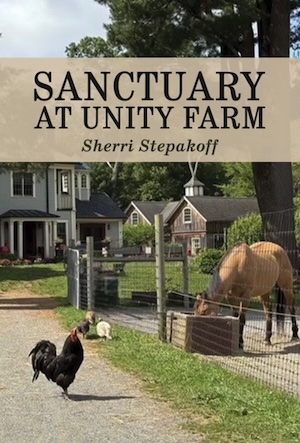
Sanctuary at Unity Farm is forthcoming from Finishing Line Press on July 10.
INTERVIEW
What does your PBK membership mean to you?
STEPAKOFF: Membership in PBK reflects a celebration of the academic choices I made in college and a continuing commitment to lifelong learning. There is no more timely message than PBK’s emphasis on intellectual breadth and depth, especially now when reliable information and sound judgment are essential to our safety and civic life. My Bachelor of Arts has enriched my life, and my studies in writing and syllogistic logic—particularly the practice of recognizing the assumptions underlying a logical sequence—have shaped my work as both a lawyer and a writer.
How has your writing style evolved over time?
STEPAKOFF: In high school, I was the only student in my English class to insist that a poem had to rhyme. Today, in Sanctuary at Unity Farm, I use a range of poetic forms to let poems unfold as they are meant to, a shift from following prescribed rules to embracing exploration.
What is the best piece of writing advice you have ever received?
STEPAKOFF: Simply put: “It’s your poem.” I didn’t always have the confidence to trust my own instincts, but this advice gave me permission to follow my sense of lyricism. It felt risky to combine poetic forms in one collection, but doing so allowed me to capture the full life of an animal sanctuary. It has been life-changing to move from seeking external validation to being fully comfortable with my own aesthetic—a lesson that extends well beyond writing.
What was your favorite book as a child, and how did it influence you?
STEPAKOFF: My favorite book was Rudyard Kipling’s Just So Stories, filled with fallible jungle animals and euphonious language. Its repeated descriptions—especially “the great grey-green, greasy Limpopo River, all set about with fever-trees”—trained my ear early on to hear the musicality of words, a sensibility I have carried into my poetry collection. In Sanctuary at Unity Farm, the moments of daily life among the rescue animals—like Palmer, the Royal Palm turkey who scrapes his wings against the ground to flirt with me—reveal each animal’s distinct personality and a shared search for safety and belonging.
What is the one thing you hope will be remembered about this story, in years to come?
STEPAKOFF: The one thing to be remembered from my poetry collection: we are here to offer sanctuary and to give voice to the hope of shade.