






By Miriella Jiffar
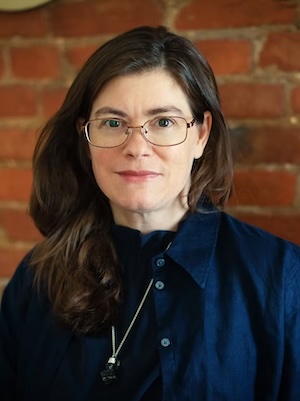
For journalist Nell Greenfieldboyce (ΦBK, Johns Hopkins), science and the realities of ordinary life are intimately connected with one another.
Her debut collection of essays, Transient and Strange: Notes on the Science of Life, seamlessly weaves science and memoir together, examining the natural world through anecdotes from her own life. Published in 2024, Greenfieldboyce’s book was called “astonishing” and “wholly original” by publisher W.W. Norton, and it was listed as a New York Times Book Review Editors’ Choice.
“Science is not something that’s very far away and separate from us,” she said. “The things that scientists are doing and thinking about and talking about are embedded in our everyday life in ways that we don’t anticipate. There’s a history to it, and we’re part of that history.”
Greenfieldboyce has reported on the intersection between science, technology, and society as a science correspondent for NPR since 2005—most recently covering the Artemis II launch, melting glacier ice, black holes, and more. She earned a bachelor’s degree in Social Sciences and a master’s degree in Science Writing, both from Johns Hopkins University.
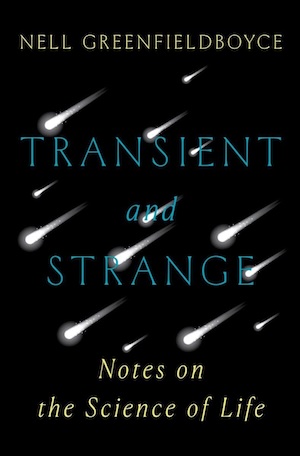
However, Greenfieldboyce first started what would eventually become Transient and Strangewhen Ann Finkbeiner, a friend and former Johns Hopkins professor, suggested she start contributing to a science writing blog called The Last Word on Nothing.
The title comes from a quote by Victor Hugo: “Science says the first word on everything, and the last word on nothing.” The blog is a place where professional science journalists can write about topics or ideas that they wouldn’t normally write about during their day jobs.
“There was this spider that I had been watching, and I had this deep feeling about this spider in my kitchen,” Greenfieldboyce said. “I thought, ‘Okay, I’ll write this little thing for Ann’s blog about this spider.’ And I did it, and I really enjoyed it.”
Later, that blog post would turn into “Spider at the Window,” one of the essays in Transient and Strange.
Writing for The Last Word on Nothing offered Greenfieldboyce a welcome change in pace from the three-minute radio stories she usually works on for NPR.
“When you’re a reporter and you’re reporting on something, you’re not making yourself the focus of the story,” she said.
“When I first wrote these things, I was just writing them by myself. I didn’t have a book contract. I didn’t have anybody who was going to publish them. So I just wrote whatever I wanted to and didn’t worry too much about who was going to read it or what they would say.”
After first trying to publish the blog posts as standalone essays, a friend of Greenfieldboyce’s suggested she package them together and speak with a literary agent about turning the essays into a book.
“I never really set out to write a book. I was just playing, just having fun, you know,” she said.
Greenfieldboyce’s first interest in science stemmed from her childhood, and she was encouraged to pursue a career in the sciences by her parents. In high school, she interned in a university research lab on environmental chemistry and eventually realized she would rather talk to people about science than be the one doing it.
In her book, Greenfieldboyce pens personal narratives on her adolescence, marriage, and motherhood, using these reflections to grapple with questions about science. Her subjects are varied, ranging from black holes and tornadoes to a minuscule flea. One of her essays, “What Else Is There?” explores her relationship with the universe and her father while searching for a micrometeorite in the piles of dust from her gutter.
She writes, “Except that the universe and everything in it that is not me always seemed so separate and unreachable, so much out there. This micrometeorite search feels like an ineffable chance to grab hold of it, or at least a small piece of it.”
In fact, the title of Transient and Strange comes from a poem, “Year of Meteors,” in Walt Whitman’s collection, Leaves of Grass, where he writes, “Year of comets and meteors transient and strange!—lo! / even here, one equally transient and strange!”
While working on the essays, Greenfieldboyce looked through old notebooks and email exchanges to verify details and facts in addition to relying on her memories.
“Even though this book is different from my day job, I’m still a reporter at heart. And so it’s very important to me that things be factual to the extent possible,” she said.
For Greenfieldboyce, her writing equates to a scientific process.
“You throw all these different things into a test tube; that is the essay,” she said.
“You throw in your memories and science and experiences that you had and things that you read, and it all mixes together and bubbles and froths, and something new comes out of it.”
“‘Love of learning is the guide of life’ has been meaningful to me,” Greenfieldboyce commented on her affinity with Phi Beta Kappa. “I’m fortunate to have a career that lets me learn constantly about a wide range of subjects, and I’ve certainly learned life lessons through the experiences I’ve had and the people I’ve been able to meet as a result.”
Miriella Jiffar is a graduate student at Northwestern University’s Medill School of Journalism, concentrating in Magazine Journalism. She is a 2025 graduate of The University of Virginia, where she studied English, Cognitive Science, and French. She was inducted into Phi Beta Kappa there in April 2025. The University of Virginia is home to the Beta of Virginia chapter of Phi Beta Kappa.