






As Phi Beta Kappa marks the 250th anniversary of our founding on December 5, 1776, we look to our beginnings for the values that will help shape our future. A love of learning and a commitment to thoughtful inquiry guided our start, providing a foundation for grappling with the questions that will define the years ahead. Few are more pressing or consequential than those surrounding artificial intelligence (AI).
The possible repercussions of artificial intelligence are attracting massive attention. Georgetown University’s Center for Security and Emerging Technology reported earlier this year that the number of annual scholarly publications on AI approached 700,000—and that only covered articles in English. Add to that the discussions of artificial intelligence in the popular press, and it is clear why we feel inundated with pieces about AI.
It is particularly fitting, as part of the commemoration of our 250th year, that Phi Beta Kappa is joining this conversation. I would like to share two recent examples of what Phi Beta Kappa does best: provide serious, thoughtful, and nuanced insights on the most consequential challenges of the day. So much discussion of AI has tended toward extremes. Either AI is a scourge to humanity that must be restricted if not altogether stopped in its tracks, or opposition to AI is the work of Luddites who cannot accept inevitable change and seek to arrest important progress. In a world that measures click rates, such extreme perspectives command headlines. Although these views draw on real personal and societal concerns, they do not adequately help us confront a central question: How should we best navigate a future in which artificial intelligence will surely replicate many, if not most, human capabilities?
Last spring, Phi Beta Kappa launched our 250th anniversary event series with “The Human Algorithm: The Liberal Arts and the Age of Artificial Intelligence,” a discussion among former presidential science advisor Alondra Nelson (ΦΒΚ, University of California San Diego), mathematician Ken Ono (ΦΒΚ, University of Virginia), and former Google global leader of research Alfred Spector, moderated by Joanna Brooks (ΦΒΚ, San Diego State University), one of the founders of the Digital Humanities Initiative at San Diego State University.
Panelists discussed how AI relates to ethics, governance, culture, education, and society. The program avoided the alarmism that characterizes so many attempts to address the existential quandaries posed by artificial intelligence. For most and perhaps all of those in attendance, this was hardly the first program that they had attended on AI. But as many commented thereafter, it was among the first that sought to enlighten and not frighten, generating more light than heat. I invite you to review the recording of the program on Phi Beta Kappa’s YouTube channel and see if you share this reaction. The complex issues raised by AI will never be understood by sound bites. Providing a setting for careful and sober analysis and dialogue is what Phi Beta Kappa has done best for the past quarter of a millennium.
We have also marked the semiquincentennial of Phi Beta Kappa with a celebratory issue of our award-winning magazine The American Scholar, approaching its own milestone in 2032, its centennial year. The Autumn 2026 issue features a special set of essays, including a reflection by our president, Dr. Esther L. Jones (ΦΒΚ, Fisk University). I am honored to have co-authored, with Dr. Alfred Spector, another of those essays, “The Synthesis Is Here,” positing that our future depends on how successfully we fuse the liberal arts and sciences with technology. How this article came to be is itself a very Phi Beta Kappa story: Dr. Spector was a Phi Beta Kappa Visiting Scholar and guest on my podcast, Key Conversations with Phi Beta Kappa, and our conversation ultimately led to our collaborating on this piece.
Coming from different perspectives on this topic, Dr. Spector and I share a deep belief that technology and the liberal arts and sciences have an enormous amount to gain from each other. Technology provides a range of opportunities to expand humanistic and scientific inquiry, such as the burgeoning field of digital humanities. The humanities and social sciences provide centuries of wisdom to address the questions that AI raises but technology itself was never meant to answer. On our campuses, the current technological revolution calls for a reaffirmation of the liberal arts curriculum for the sake of those in the arts and sciences, for those in technology, and for society at large. As we wrote, “We believe that a deeper connection must be fostered between humanists and technologists. At the moment, however, a significant gap exists between them. The technical advances we are witnessing have made the need to bridge this gap more relevant and urgent than ever before.” Our article attempts to contribute toward bridging that gap.
Two hundred and fifty years after our founding, Phi Beta Kappa’s mission has never been more relevant, compelling, or needed. Our anniversary provides the perfect opportunity to put that mission into action as we gather for events around the country this year. Please join us in this celebration, especially on December 5 at the National Postal Museum in Washington, D.C., when together we launch the next 250 years of Phi Beta Kappa.
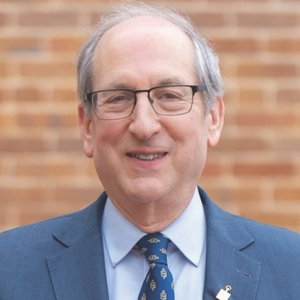
Frederick M. Lawrence
Secretary and CEO
Secretary Lawrence has spoken nationally and internationally on free expression, academic freedom, and the importance of liberal arts and sciences education. In 2025, he delivered a keynote address on the challenges facing higher education at the annual meeting of Universities UK, the institution representing all British universities. Over the past year, he spoke at the University of Ljubljana, Slovenia, the Hertie School in Berlin and Università Ca’ Foscari Venezia in Venice. He has addressed the American Association of Colleges and Universities, the American Council on Education, and the annual Higher Education Law & Policy conference. He has appeared on PBS NewsHour, CNN, and CBC. In addition to his role at the Society, Secretary Lawrence is a distinguished lecturer at the Georgetown University Law Center, where he teaches “Free Speech on Campus” and “Higher Education and the Law.” He is the author of numerous articles on the topics of free expression, free inquiry, and academic freedom, and he is a co-author of the forthcoming third edition of Higher Education and the Law, the leading casebook in the field.